







Help Desk
Help Desk: Establishing Installations
Help Desk is where I answer your queries about making, exhibiting, finding, marketing, buying, selling–or any other activity related to contemporary art. Submit your questions anonymously here. All submissions become the property of Daily Serving.
How do I get started as an installation artist? Large, site-specific pieces don’t lend themselves well to collectors, or even to me developing a body of work without knowing what space it will fill; nor do they photograph well for portfolios. Do I pitch the concept to galleries, and then build it when they say yes? Ought I construct them in a studio space, and then invite viewings? Should I practice concept illustrations and devise explanatory sketchbooks, and build dioramas, and build a reputation on that first? I am at the very start of my career, and hoping to go straight into work rather than the expense of a school, so I’m starting with no contacts, and no road map to what a studio practice geared towards installations might look like.
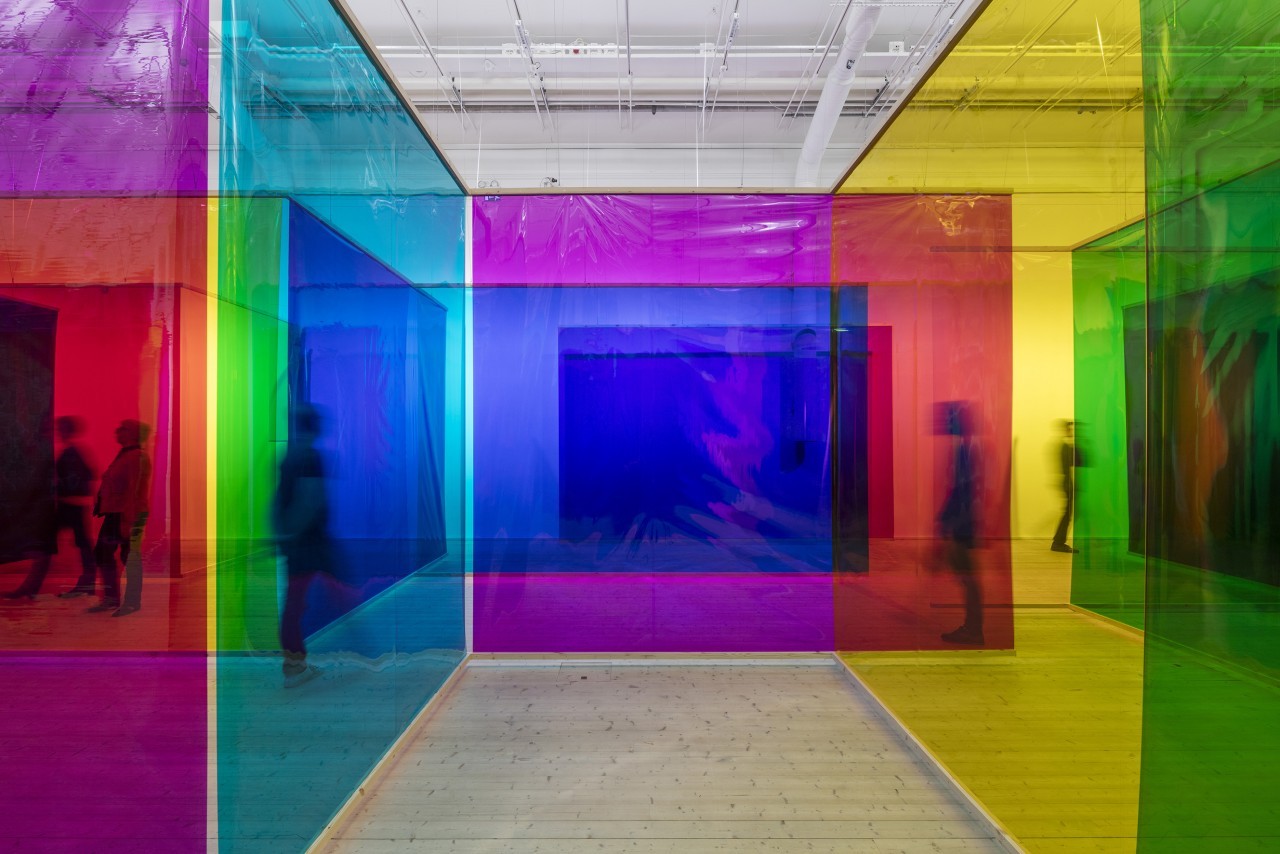
Olafur Eliasson. Seu Corpo da Obra (Your Body of Work), 2011; installation view, Moderna Museet, Stockholm. Photo: Anders Sune Berg.
The thing about getting started as an artist—in any medium—is that you just have to begin. If you think of installation art as a scaled-up, spatially aware sculptural practice, then you might find it advantageous, both for mastering techniques and for building a professional career, to begin by making sculptures and getting them into good venues. You’ll hone your technical skills and become an expert in sourcing materials, and sculptures have the advantage of being more easily shipped and exhibited in group shows, so you can build your résumé.
Likewise, preparatory illustrations and maquettes are critical components of an installation artist’s practice, so make them, too. They will be invaluable tools for clarifying your ideas and focusing your artistic goals. Additionally, you will use them to create convincing proposals for installations; learn to use SketchUp or another program that allows you to build installations in accurately scaled virtual spaces, and don’t forget that your sketches and maquettes are part of your body of work, and can be exhibited as drawings and sculptures in their own right.
Let’s be realistic about commercial galleries. Most, or at least the ones at an attainable level for the beginner, will not be interested in installations because there is generally nothing to sell, and selling is how they keep the lights on. Larger galleries will occasionally host an installation made by an artist from their permanent stable, with the hope that it will boost the value of the artist’s smaller, more salable works. Nevertheless, if making white-cube installations is your heart’s desire, then professionally finish a corner of your studio so that you can stage and photograph them there. Think of this as an extension of the adage “dress for the job you want”—you’re more likely to convince a gallery to take you on if you can show them that you’ve already created works in white-walled space.
Conversely, if you find that you want to make site-specific work, you could use the basements, garages, spare bedrooms, and backyards of friends and relatives. Many cities have some sort of public installation space to which anyone can apply, frequently in a public library or municipal building. The space doesn’t have to be grand; a vitrine, a stairwell, or a bathroom can be inspiring. If you’re not a great photographer or don’t have access to a decent camera that shoots RAW files, hire a professional. It’s not true that installation work doesn’t photograph well; sometimes it’s just a matter of having a good angle and the right lens.
Show your sculptures, drawings, maquettes, and installations to as many people as you can. Trade studio visits with other artists and talk to art critics and curators. Go to openings and lectures, be engaged in your community, and make a space for yourself in the world. Don’t make contacts, make friends and allies.
Now that we’ve gone over the basics, here’s a next-level idea: Stop thinking that there’s a right way to do this. The fantastic thing about being an artist, the thing you should cherish every day, is that there really aren’t any rules. You can define the entire field for yourself. Don’t wait for a gallery—or an advice columnist, or anyone else—to say yes before you do the thing you want to do. Wake up in the morning and give yourself permission, out loud if necessary. And don’t forget to have some fun. Good luck!





