







Savannah
Come As You Are: Art of the 1990s at the Telfair Museums
Finally, here is an exhibition for which an accompanying Spotify playlist seems perfectly natural. Songs like “Smells Like Teen Spirit” by Nirvana and “Vogue” by Madonna are closely connected to the not-so-recent decade that the Telfair Museums represents through works of art in Come As You Are: Art of the 1990s. Curated by Alexandra Schwartz with Kimberly Sino (both of the Montclair Art Museum, where the show originated), the show explores the motivations for much art practice from 1989 to 2001.

Come As You Are: Art of the 1990s, 2015; installation view, Jepson Center for the Arts, Telfair Museums, Savannah, Georgia. Courtesy of Telfair Museums. Photo: David J. Kaminsky.
The exhibition breaks the decade into three thematic sections that also represent chronological periods. The first of these is “Identity Politics” (with the date range 1989–1993). After that, the exhibition transitions to “Digital Technologies” (1994–1997), and concludes with “Globalization” (1998–1999). Each of these themes is so complex that a museum may struggle to fully explore a single one within an exhibition. Thus it appears a herculean task to successfully encapsulate them in one show. Ultimately, despite a few awkward moments, Come As You Are integrates these disparate themes.
One of the strong points of the exhibition is its selection of powerful works. The curators of the show reference several pivotal exhibitions of the ’90s, including The Decade Show (1990) at the New Museum, Black Male (1994) at the Whitney Museum of American Art, and the Third Havana Biennial (1989). Many of the works within this show appeared in those exhibitions, which lends Come As You Are considerable authority. In this way, Come As You Are consists of works that helped to define such topics as identity politics rather than works bolstered by a burgeoning art market.
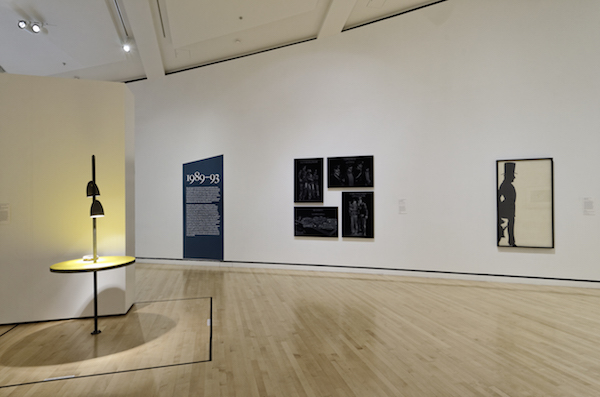
Come As You Are: Art of the 1990s, 2015; installation view, Jepson Center for the Arts, Telfair Museums, Savannah, Georgia. Courtesy of Telfair Museums. Photo: David J. Kaminsky.
The stronger works in the show are the ones that operate within more than one of the themes addressed by the exhibition. One example is Mendi and Keith Obadike’s Blackness for Sale (2001). For this work, the artist duo listed the blackness of Keith Obadike’s skin for sale on the then-increasingly popular website, eBay, which removed the listing after four days, claiming the material was inappropriate. Installed physically in the “Globalization” section of the show, the work shares roots with the earlier periods of identity politics and emerging digital explorations, and remains powerfully relevant today, speaking to a society still grappling with race-related issues.
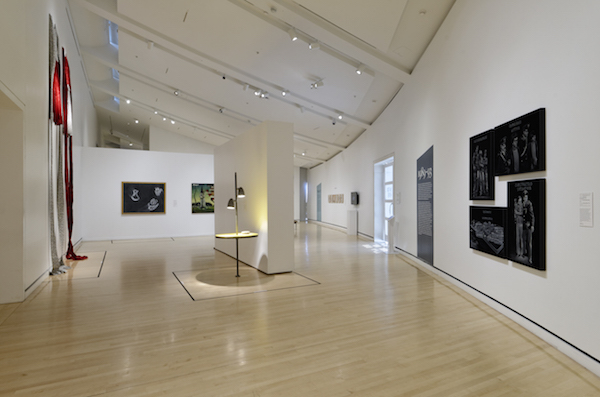
Come As You Are: Art of the 1990s, 2015; installation view, Jepson Center for the Arts, Telfair Museums, Savannah, Georgia. Courtesy of Telfair Museums. Photo: David J. Kaminsky.
Other works stand well on their own. Beverly Semmes’ Famous Twins (1993) consists of two absurdly large dresses, with comically long sleeves, and points to the construction of feminine identity. This topic is reprised in various works throughout the show, notably Shirin Neshat’s untitled work from 1995 (from her Women of Allah series) and Nikki S. Lee’s photographic series Hispanic Project (25) (1998), The Ohio Project (7) (1999), and Punk Project (1) (1997), in which the artist adopts specific cultural stereotypes. Works by Pepón Osorio (a couch with a suicide note left by the mother of the artist’s friend) and Ellen Gallagher (a monochrome-like collage with latent racial imagery) are also noteworthy inclusions to the show.
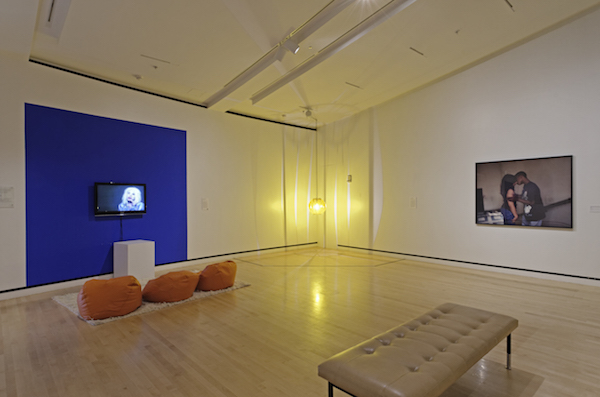
Come As You Are: Art of the 1990s, 2015; installation view, Jepson Center for the Arts, Telfair Museums, Savannah, Georgia. Courtesy of Telfair Museums. Photo: David J. Kaminsky.
As a collection of artists working in temporal proximity, Come As You Are demonstrates the highlights and the limitations of such period-based exhibitions. While the works in the show stem from a specific moment in society and thus share similarities—hence the three major themes—some fascinating curatorial decisions seem unfathomable, and yet they succeed serendipitously. For instance, in one section of the exhibition, the viewer encounters a number of works: an untitled Laura Owens painting (1995); a series of mise-en-scène photographs by Sharon Lockhart; a Jorge Pardo hanging lamp, bathing a section of the gallery in yellow light; and finally Alex Bag’s well-known film, Untitled Fall ’95 (1995), a work that anticipated the style and ubiquity of digital, internet-based video of the past two decades. Due to the curators’ adept selection of works and attention to historical context, the connections between the works may seem nebulous but are rewarding.
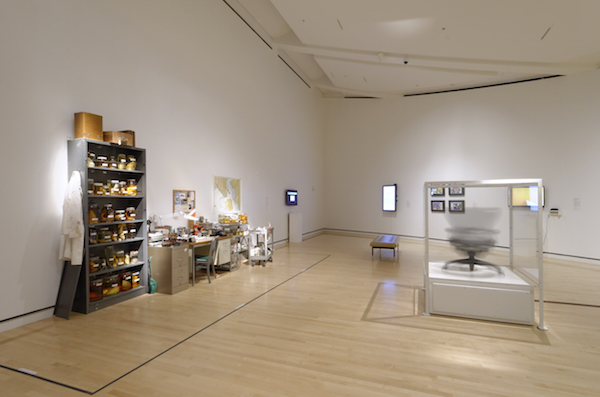
Come As You Are: Art of the 1990s, 2015; installation view, Jepson Center for the Arts, Telfair Museums, Savannah, Georgia. Courtesy of Telfair Museums. Photo: David J. Kaminsky.
Thus exhibitions that examine art from a specific period in time can be worthwhile scholarly endeavors. Though the curators carefully constructed Come As You Are through rigorous research—which is evident in the show’s catalog—the lack of historicization of art from the ’90s presents challenges that art from earlier eras does not. Nonetheless, Come As You Are excels in connecting three major themes in art—identity politics, digital technologies, and globalization—and illustrates the underlying connections between them.
Come As You Are: Art of the 1990s is on view at the Telfair Museums’ Jepson Center for the Arts through September 20, 2015.
This article is made possible by our Writers Fund, thanks to readers like you. Help us keep it going!





