







San Francisco
She Who Tells a Story: Women Photographers from Iran and the Arab World at Cantor Arts Center
Today from our partners at Art Practical, we bring you a review of She Who Tells a Story: Women Photographers from Iran and the Arab World. On view though May 4 at the Cantor Arts Center at Stanford University, the exhibition showcases the work of twelve photographers from Iran and neighboring nations. Author John Zarobell notes that the works are “immensely poetic expressions of building a life in a world so full of destructive potential it has become inured to personal tragedies.” This article was originally published on February 17, 2015.
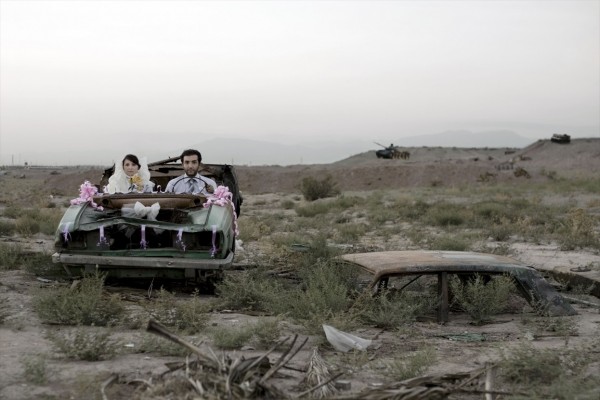
Gohar Dashti. Untitled #5 from the series Today’s Life and War, 2008; pigment print. Courtesy of Cantor Arts Center, Palo Alto.
Countless narrative threads run through this unprecedented exhibition. Most of the women photographers who are featured hail from the Middle East, and all engage with dynamics of contemporary Muslim culture, violence, and the region’s complicated relationship with Western ways of seeing (and thinking). The curators who assembled the exhibition clearly meant to highlight photography as a storytelling device; almost all of the works in the show are drawn from series.
The decision to focus on women photographers exposes a [Western] political subtext of presenting the world from a female perspective. The politics involve the reversal of the gaze, the refutation of stereotypes, and the repudiation of Orientalism, that long-standing tradition of representation emerging from Europe that so often placed “exotic” women from “the East” in the position of objects to be consumed. This subtext introduces a curious paradox to the exhibition: These artists are not usually interested in telling stories that return the gaze of “the West” or correct false stereotypes. Certainly there are exceptions—Boushra Almutawakel offers correctives to the incursion of more restrictive veiling, while Shadi Ghadirian delivers send-ups of nineteenth-century Orientalist images of Middle Eastern women—but the overall message that emerges from this exhibition is not concerned with the perception of Middle Eastern women by Westerners or conservatives in their own countries. Instead, the viewer encounters moments of experience and glimpses of protest in images that are sometimes staged and sometimes straight but always full of personal meaning.





