







Summer Reading
Summer Reading: The Unlearning
As the editors at Art Practical and Daily Serving get ready to take their end-of-summer vacations, we find ourselves swapping reading lists—the articles we’ll dive into once have some uninterrupted time to catch up on what our colleagues have been writing. We’ve gotten so excited about what’s on our lists that we want to share them with our readers. Between now and Labor Day, Daily Serving will feature the efforts of our fellow chroniclers of art and culture as part of our Summer Reading series. Today, from our friends at Guernica, we are pleased to present “The Unlearning,” in which Tatiane Schilaro considers the work of performance artist Paulo Bruscky. It was originally published on July 15, 2014. Many thanks to the editors at Guernica for their help in making this series possible. Enjoy!
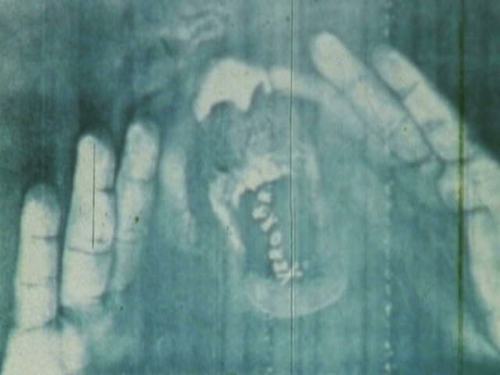
Paulo Bruscky. Xeroperformance, 1980; Super 8 film on video. All images courtesy of Galeria Nara Roesler.
“Subverting always makes sense if it doesn’t feel like a rule, but if it allows also recreation, which is the same as re-creating.”—Paulo Bruscky
I first encountered Paulo Bruscky’s works in 2013 far from São Paulo, my home, at the show Paulo Bruscky: Art Is Our Last Hope at the Bronx Museum. Bruscky was born in Recife, in the northeast of Brazil, in 1949. He began making art during a hard moment for Brazilian politics: a military dictatorship that lasted from 1964 to 1985. What was important in Bruscky’s early practice was that he was also looking for, and ended up finding, answers to repression by making art meant to experiment, using creativity and imagination to subvert an adverse condition—essentially, starting from scratch. He called this the process of unlearning. Seeing his early pieces was a way of digesting the June 2013 protests that I hadn’t experienced. Bruscky also helped me understand how the events of the 1960s still resonate now.
It’s been fifty years since Brazil was taken over in a military coup; the result was over twenty years of dictatorship. During the 1970s, militants, students, and intellectuals were persecuted, tortured, sent into exile, or killed. Brazil was flooded by ideological hostility from the right and the left. Up in Recife, Bruscky was going against the flow of control: He often worked alone, doing performances in the public space, testing and regularly surpassing the limits imposed by the regime. His first works were part of the “mail art movement,” whereby artworks were sent via the postal service, to spread the word about the oppression.





