







Summer Session
Summer Session – Proximities 3: Import/Export at the Asian Art Museum
From our sister publication Art Practical, today we bring you the next installment of our Summer Session—for June, we’re considering the idea of labor. Author Heidi Rabben assesses the exhibition Proximities 3: Import/Export at the Asian Art Museum in San Francisco and notes that it “provocatively address[es] the larger issue of material and immaterial labor across transactional flows.” This article was originally published on February 17, 2014.
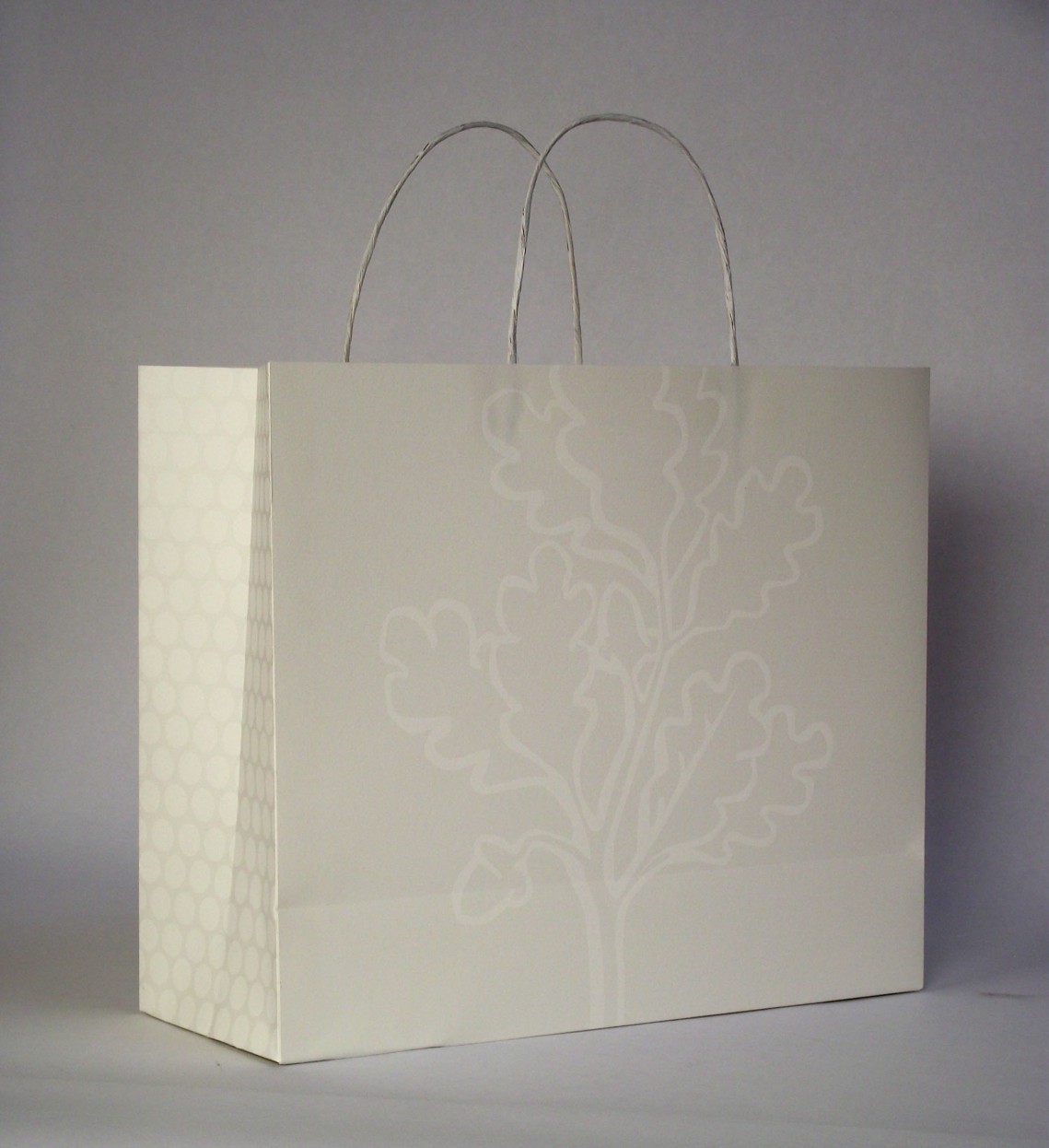
Imin Yeh. Paper Bag Project, 2013; handmade paper bag; 15 x 12 x 6 in. Courtesy of the Artist.
Proximities 3: Import/Export is the third and final exhibition in a series at the Asian Art Museum exploring the Bay Area’s perception of, and relationship with, an increasingly globalized Asia. In this last installment, curator Glen Helfand [Full disclosure: Helfand has been an Art Practical contributor] has assembled a formidable group of artists whose work responds to issues around manufacturing, labor, trade, and commodification. The exhibition covers plenty of ground: Amanda Curreri’s works reference her time in South Korea, Byron Peters collaborates with a Shenzhen-based company to create his digital work, Imin Yeh borrows her creative process directly from India, and Rebeca Bollinger displays objects inspired by Japanese culture. Meanwhile, Leslie Shows’ and Jeffrey Augustine Songco’s contributions take a more macro approach to the region, thereby allowing the exhibition to simultaneously hone in on more narrow, context-specific scenarios while still addressing the wider implications of our relationship with Asia as a region. Of primary concern remains our growing reliance on outsourcing, industrial manufacturing, and the mobility of both material and immaterial labor.
On the material side, Imin Yeh’s work Paper Bag Project (2013) reveals the painstaking process of creating a consumer object with a very short lifespan: handmade paper shopping bags. Yeh singlehandedly replicates a production process she witnessed while visiting a factory in India, and documents every step on video, from hand pulping the paper, to screen printing designs, to weaving the rope handles. The finished objects hang in the exhibition space in a grid against a white wall, their subtle pearlescent texture nearly blending into the background. With the addition of the accompanying video, we become acutely aware of how easily we could (and often do) miss the detailed amount of labor that goes into such disposable objects. Yeh’s piece underlines the wide disparity between labor and the attribution of value in trade and globalized societies.





