







Sydney
Chen Qiulin: One Hundred Names at 4A Centre for Contemporary Asian Art, Sydney
What’s in a name? In ancient China, surnames represented clans and ancestral lineage, a highly significant aspect of identity and filial obligation. In contemporary parlance, the Chinese phrase “Lao Bai Xing” (literally, “the old hundred names”) translates as “the ordinary people” or “the common folk.” It often refers to the voiceless, those who are most powerless in the face of social forces. For many years, Chen Qiulin has been documenting how the dramatic transformations of China’s physical, cultural, and social landscapes have impacted the lives of these ordinary people. Her hometown of Wanzhou was affected by the construction of the Three Gorges Dam, in which whole villages and towns along the Yangtze River were submerged, and more than a million people were relocated. In recent years, her One Hundred Names project has been representing that concern in an unexpected medium, as she carves the most common Chinese surnames into blocks of firm tofu and then documents their decay and disintegration over time. For her first solo exhibition in Australia, at Sydney’s 4A Centre for Contemporary Asian Art, these earlier works, together with a commissioned project, explore themes of ancestry, diaspora, and displacement in a broader historical and geographic context.
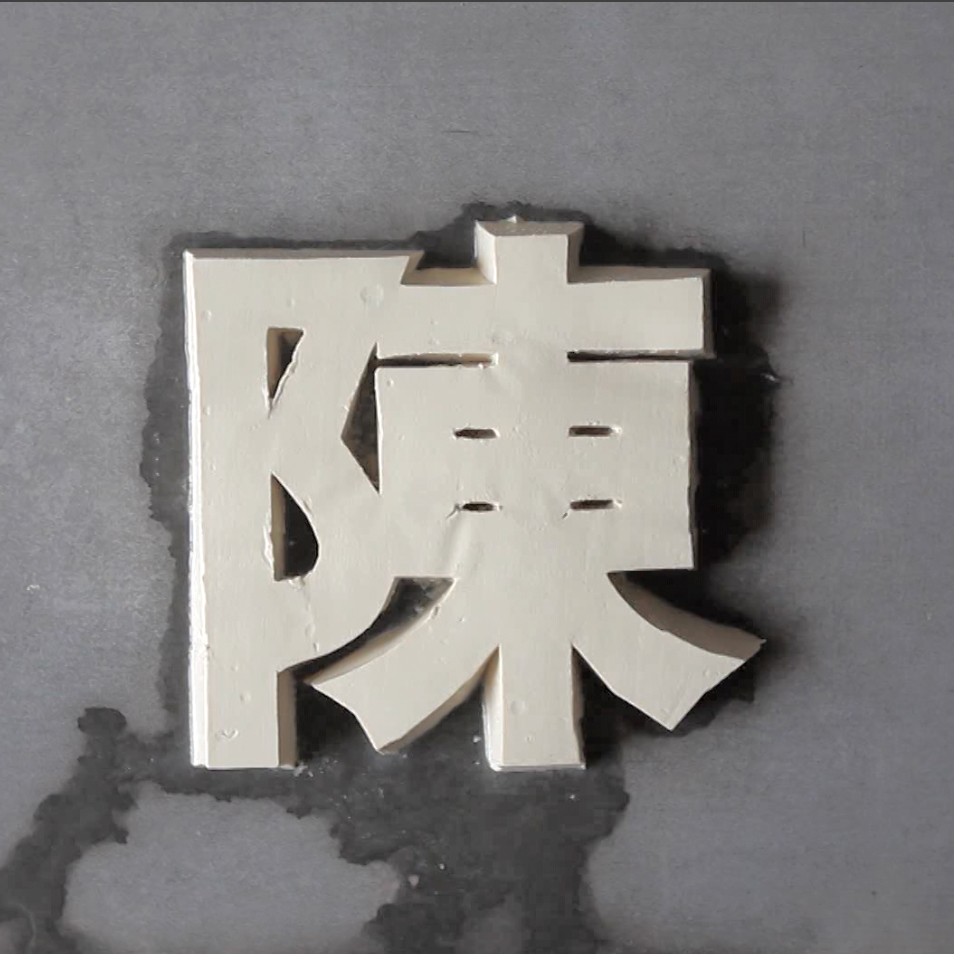
Chen Qiulin. A Hundred Surnames in Tofu, 2010; still from video installation. Courtesy of the Artist and A Thousand Plateaus Art Space, Chengdu.
One Hundred Names for Kwong Wah Chong continues Chen Qiulin’s use of tofu as an artistic medium. She examined the history of early Chinese migration to the Haymarket/Chinatown precinct of Sydney, where the gallery is situated in a historic building. Research revealed the names and stories of the earliest diasporic Chinese presence in the city—mostly Cantonese-speaking migrants who arrived in Australia between 1840 and 1920 from southern China, becoming market gardeners, restaurateurs, and business owners. The titular Kwong Wah Chong was, in fact, Sydney’s first Chinese-owned and operated business, a center of support and information for recent arrivals. The artist, together with curator Toby Chapman and the 4A team, found and interviewed current Sydney residents with those same surnames, whose stories revealed that how people remember “home,” often tinged with loss and nostalgia, is a common experience across diverse cultures and languages. Each of these surnames was carved from tofu and their consequent disintegration documented. Back in Chengdu, Chen Qiulin sought out families who shared those same surnames. She asked them for their favorite tofu recipes and videotaped the encounters, which took place in their kitchens while they cooked the recipes and recounted the stories behind them. Thus a connection was forged across continents and divergent histories. Chen Qiulin’s practice poetically captures the beauty of these unlikely connections, as well as the tragedy of displacement.
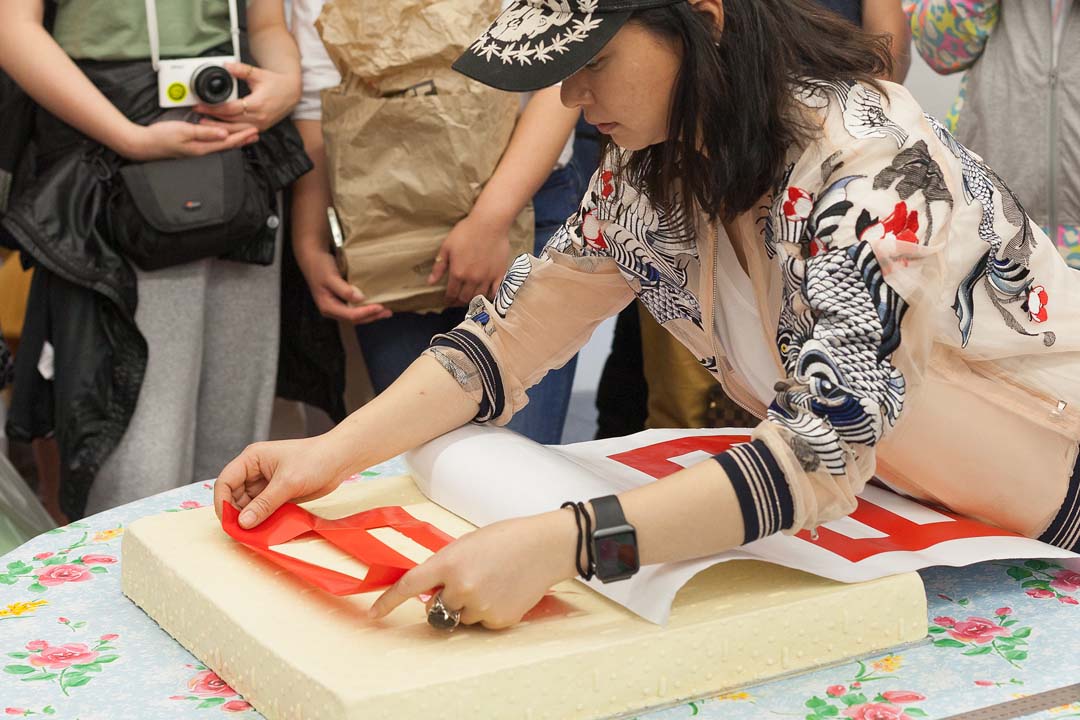
On the ground floor of 4A’s gallery space, banks of televisions and screens display the resulting videos. At the exhibition’s opening, the artist demonstrated tofu carving, working with a large block of firm tofu set out on a table covered by a cheerfully domestic floral tablecloth. For Chen, her chosen medium of tofu, one of the oldest and most commonly used ingredients in Chinese cooking, is both personal and universal. It speaks of domesticity and childhood memories of home, but it also references the inevitability of decay and disintegration, becoming a potent symbol of the traumatic change experienced by Chinese citizens in recent years. As recipes are handed down from generation to generation, often with family members spread across the globe, tofu also becomes a metaphor of migration. Chen identifies a kind of alchemical process operating here; one kind of raw material is transformed into another by intensive labor.
![Chen_Qiulin,_The_Garden_No._1_(2007),_c-type_print._100_x_82_cm._Courtesy_the_artist_and_A_Thousand_Plateaus_Art__Space,_Chengdu[1]](/wp-content/uploads/2016/01/Chen_Qiulin_The_Garden_No._1_2007_c-type_print._100_x_82_cm._Courtesy_the_artist_and_A_Thousand_Plateaus_Art__Space_Chengdu1.jpg)
Chen Qiulin. The Garden No. 1, 2007; C-type print; 100 x 82 cm. Courtesy of the Artist and A Thousand Plateaus Art Space, Chengdu.
One Hundred Names is on view at 4A Centre for Contemporary Asian Art, Sydney, through February 27, 2016. It will be on view at the Shepparton Art Museum, Victoria, from June 4 to July 31, 2016.





