







The Artist as Player in “Girls” & “The Golden Girls”
From our partners at Art Practical, today we bring you an excerpt from an essay on artistic personae by Jim Gaylord. This article was commissioned by guest editor Jonn Herschend as part of Issue 5.5, Slapstick and the Sublime, and originally published on July 10, 2014.
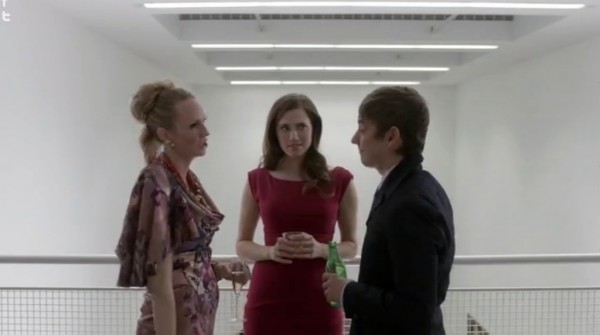
Jesse Peretz. “Bad Friend,” Girls, 2013 (film still); 00:30:00. Courtesy of HBO.
[…] Helping to keep the artist/heartbreaker stereotype alive today is the character of Booth Jonathan (Jorma Taccone) from the HBO series Girls (2013). The creation of writer/actor/director Lena Dunham (daughter of artists Carroll Dunham and Laurie Simmons), it’s fair to assume—given the show’s exaggerated yet realistic tone—that he is based on people Ms. Dunham has actually known in the New York art world. Booth is the kind of cocky, womanizing hipster who sleeps with his dealer and hates the High Line.
His persona is nothing new, bringing to mind Adam Coleman Howard’s “Stash” in Slaves of New York or Steve Buscemi’s role as Gregory Stark in New York Stories, both coincidentally from 1989. These bad-boy art stars exploit their successes to get what they want from others, usually with little consequence. Indeed, in Girls, Booth’s allure is often proportional to his misogynistic behavior. Even after locking the starstruck Marnie (Allison Williams) inside one of his video sculptures against her will, she later praises him for his talent and then has creepy sex with him. “I’m a man,” he tells her, “and I know how to do things.”
It isn’t long before Marnie believes Booth is her boyfriend, but she is actually falling in love with what he represents to her. Having been fired from her gallery job and turned down for another, she is struggling with her own identity. Booth’s “aura” as an artist is clearly attractive to Marnie; perhaps she sees him as a window back into that world, and a way to enter its higher echelons.
Like actors, artists have public personas, which their audiences can mistake for the genuine, private self. Many have intentionally exaggerated their eccentricities to attract attention, such as the outwardly flamboyant Salvador Dalí. In the case of Girls, the Booth who Marnie sees (as opposed to whom we see) is largely a projection from her own imagination. When it later becomes clear that he was just using her, Booth evades any responsibility by throwing a tantrum about how “no one even knows me” and “everyone just uses me for what I represent to them.” These protests elicit little sympathy since, no doubt, there’s likely another admirer willing to be the next victim of his abuse in line behind Marnie.





