







Partisan
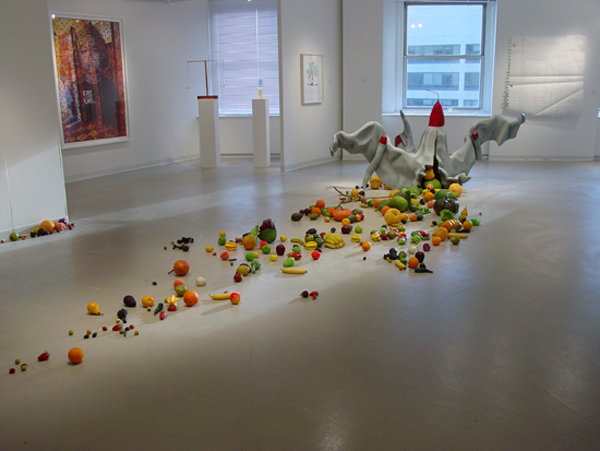
Amongst the labyrinth of booths at this year’s Art Chicago is Partisan, a special exhibition of works that explore social and political ideas. Selected from Art Chicago and NEXT galleries by guest curator Mary Jane Jacob, independent curator and director of exhibitions at The School of the Art Institute of Chicago, Partisan works represent a multitude of political ideas and positions from around the world.
According to Jacob, “It is no wonder in this day and age that artists are reengaging one of the most critical subjects in art: the political and social climate, war and survival. Such human dramas that shape destiny have always existed in the history of art, but they are not usually found, no less highlighted, in the environment of an art fair. So this year’s “Partisan” show is evidence of inescapable concerns on everyone’s minds and which have a place in every sector of the art world.”
While Partisan offers global insights, the exhibition is anchored by the inclusion of politically-oriented works by American artists such Philip Evergood, who is known for practicing a brand of Social Realism in the 1930s and 1940s, as well as prolific artists Leon Golub and Nancy Spero, of whom works will be on view from the 1970s and 1980s.
Much of Partisan‘s energy, however, comes from newer generations of artists whose project-oriented works not only demonstrate critique and resistance, but they also imagine new possibilities.
Highlights include the video installation, The Penal Colony, by Vietnamese artist Dinh Q Le, which depicts the inside of the walls of a Vietnam prison historically known for abuse of activists and was inspired by the inhumane treatment of prisoners at Guantanamo Bay detention camp in Cuba; There are things we know …a large scale installation by New York-based artist John Delk features 26 security surveillance globes. Finally, Maximo Gonzalez imagines new uses for obsolete vehicles in large drawings from the series Project for reutilization of vehicles obsolete after the extinction of petrol, whereby abandoned motorcycles become gardens and cars are oversized planters.





